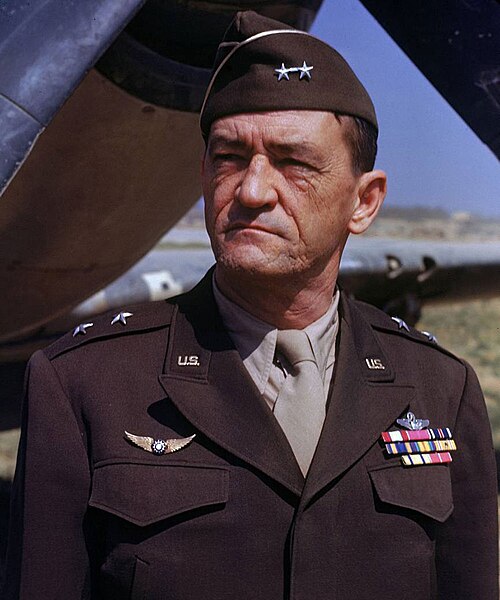
 Claire Lee Chennault's remarkable career took him from the American South to the war-torn skies over China. Born in 1893 in Commerce, Texas, Chennault's life would span continents and reshape aerial warfare in his time.
Chennault's American military career began during World War I, when he enlisted in the Army but arrived in Europe too late to see combat. Transferring to the Army Air Corps in 1920, he distinguished himself as both a fighter pilot and tactical innovator. He first came to national attention as the leader of “The Three Men on the Flying Trapeze,” the Air Corps’ aerobatics team. Despite his brilliance, his advancement was limited by his confrontational nature and his vigorous championship of fighter aircraft when bomber advocates held sway. He retired as a captain in 1937.
He was hired that same year to modernize Chinese Air Force planes and pilot training. After Pearl Harbor thrust America into World War II, Chennault's American Volunteer Group, the Flying Tigers, was ready to defend China. As the only air force able to overcome the superior maneuverability of Japanese fighters, their shark-faced P-40 fighters became worldwide iconic symbols of hope. His pilots employed his innovative hit-and-run tactics to great success and slowed the Japanese advance in Burma.
Chennault was recalled to active duty and promoted to brigadier general in the US Army Air Corp in July, 1942. He commanded the China Air Task Force and later the Fourteenth Air Force, orchestrating aerial operations across China until the end of the war in 1945.
In 1946, he co-founded the commercial airline, Civil Air Transport (CAT), which provided crucial air service throughout postwar China. In 1949, CAT relocated to Taiwan and continued operations across Asia. The airline ran missions for the early CIA and later evolved into Air America.
Chennault documented his experiences in his 1949 memoir Way of a Fighter, which chronicled his military philosophy, the Flying Tigers' campaign, and his commitment to China. He wrote a number of shorter articles and manuals which explain his theories. Many of his theories were proven accurate in WWII battles, eventually changing aviation strategy on both sides.
After several years of declining health, Chennault died of lung cancer in 1958, having been promoted to lieutenant general on his deathbed by President Eisenhower’s order.
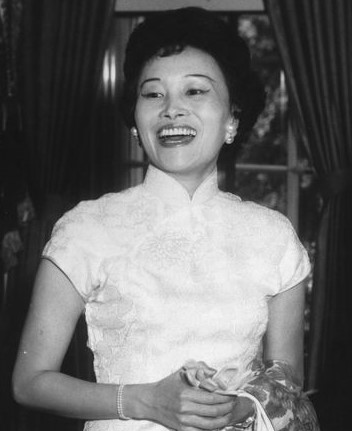 Anna Chennault was only married to her husband Claire Lee for a little over 10 years, but developed a career all her own in the social world of Washington D.C. Her penthouse in the Watergate hotel would host Presidents, lawmakers, lobbyists, businessmen and the occasional foreign dignitary.